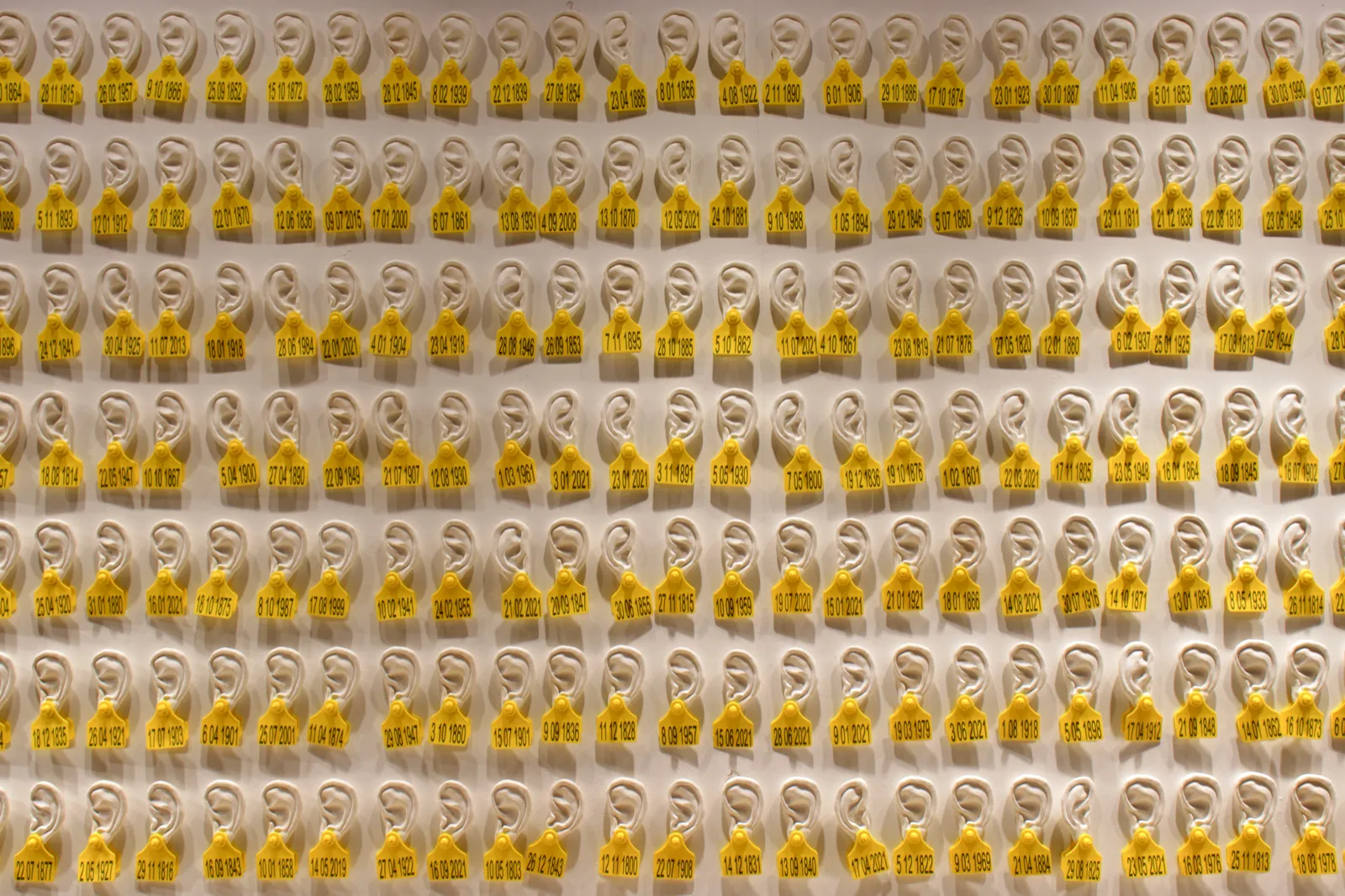
From the series
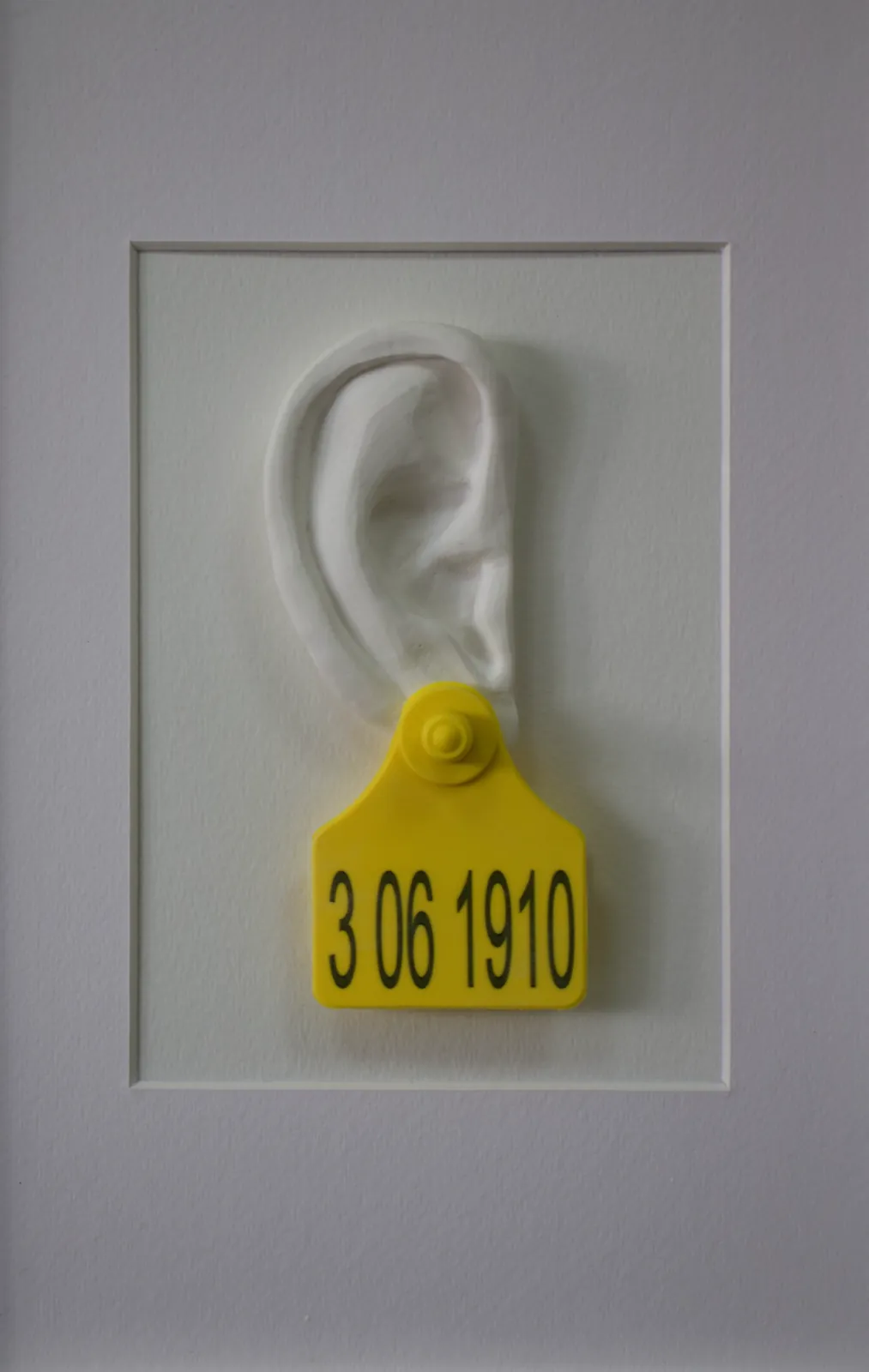
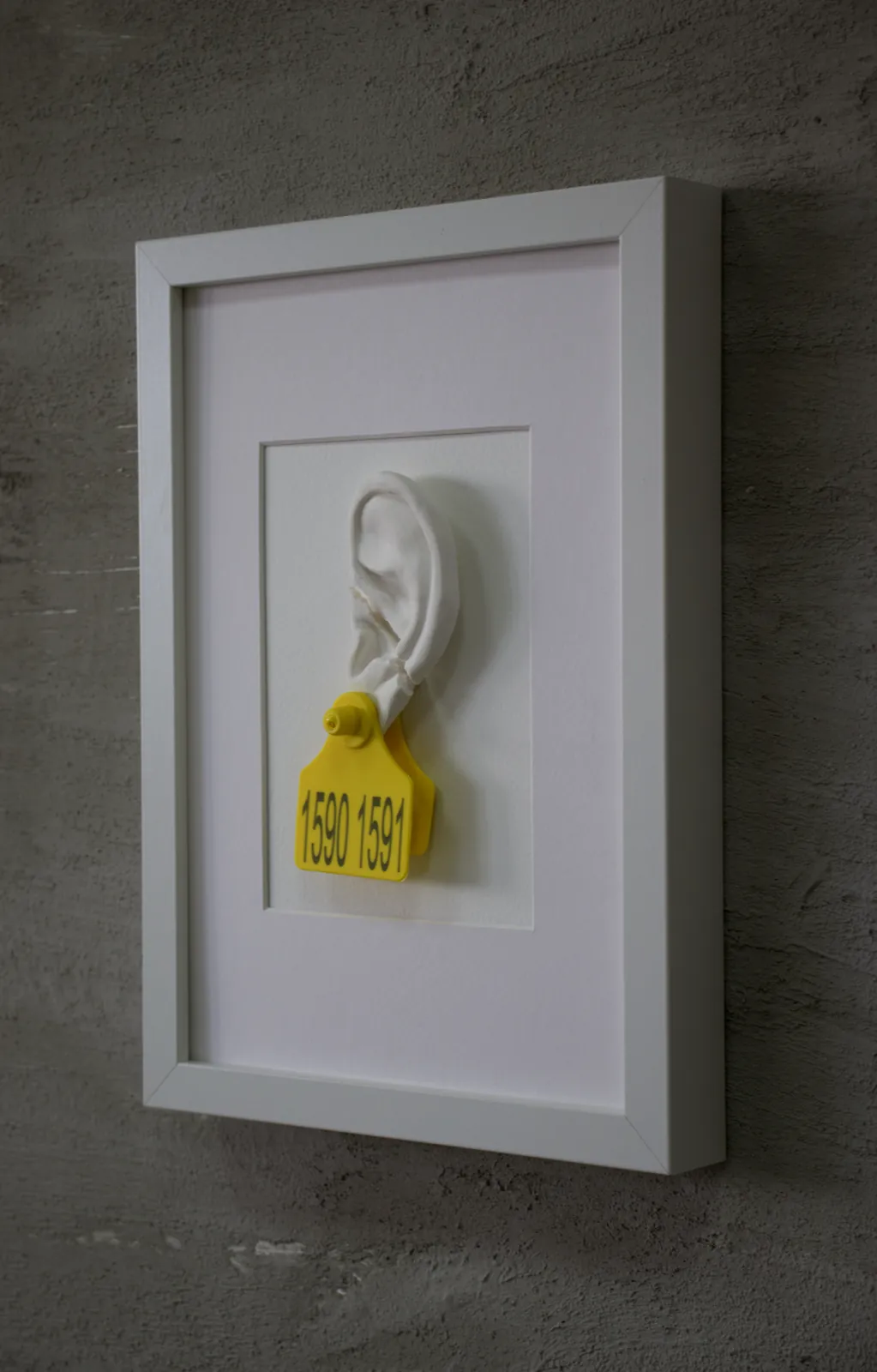
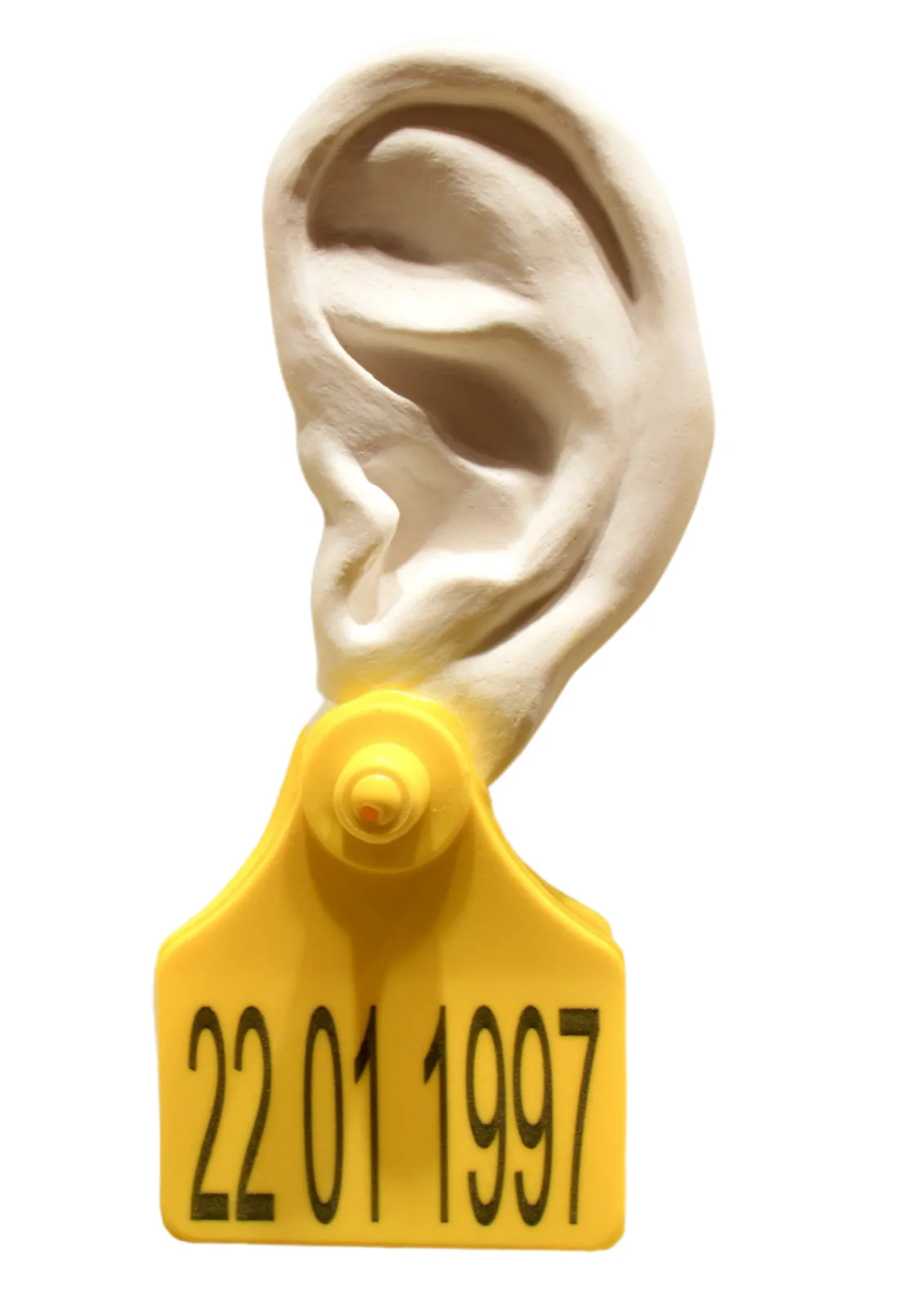
A human ear cast in plaster, and a yellow livestock tag pierced through it. The number on the tag is not a herd number — it is a date.
The act of commodifying living beings and legitimizing domination begins with turning animals, whose very existence is denied as having intrinsic value, into mere objects for human benefit. It disregards their status as subjective beings, asserts rights over the powerless, and normalizes this exploitation. Yet behind these masked and anonymized beings are selves with emotions that are exploited. According to Gary L. Francione, recognizing that non-human beings are sentient is very different from merely acknowledging them as living creatures. To be sentient means to be aware of pleasure and pain, to possess subjective experiences, and to exist as a self with consciousness. At this point, the being moves beyond being an object, becoming a member of society and an individual. However, according to the dominant societal perspective, consumption, devaluation of the Other, and the concealment of all forms of violence are normative. This issue parallels environmental destruction, the slaughter of animals, and the deterioration of human health.
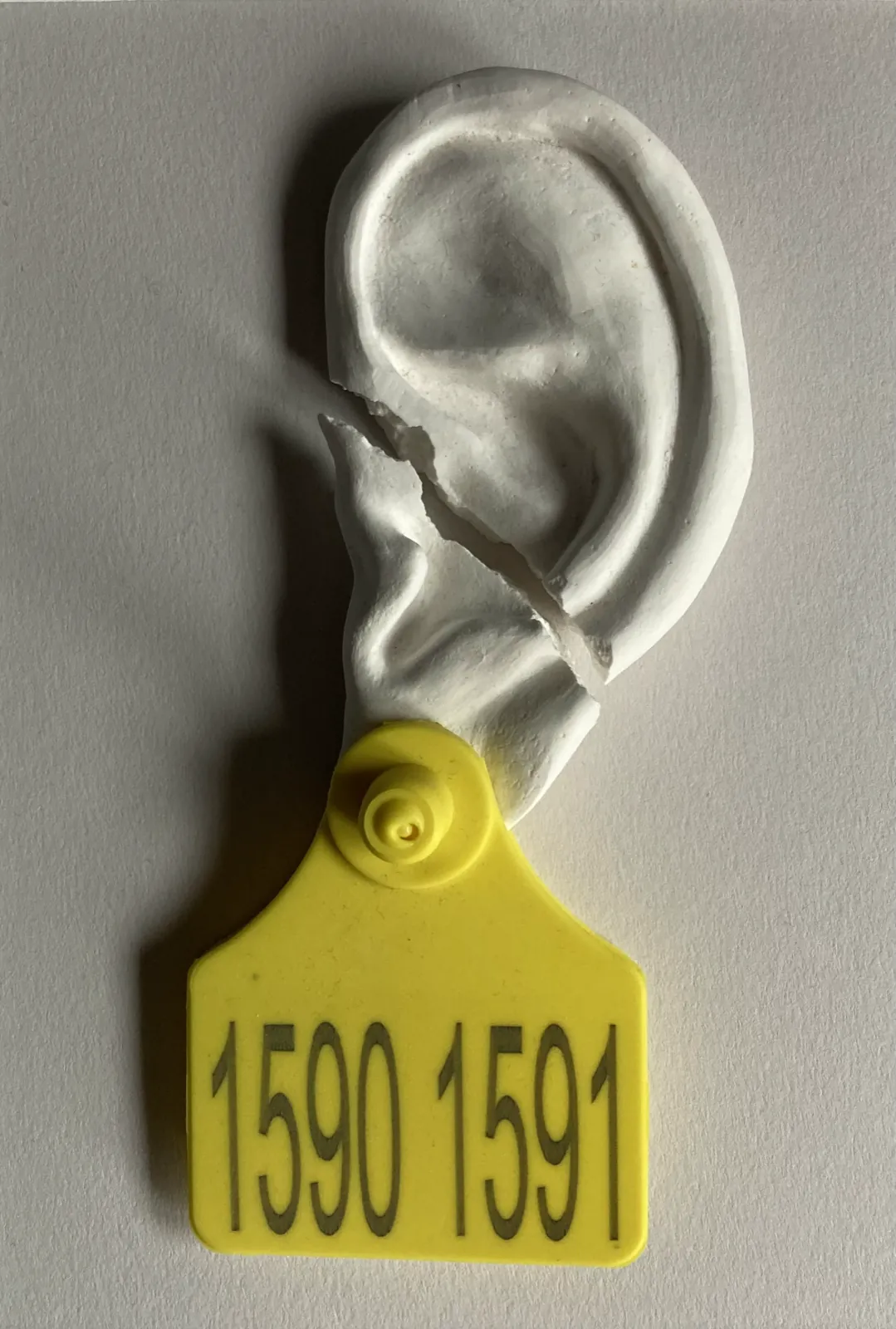
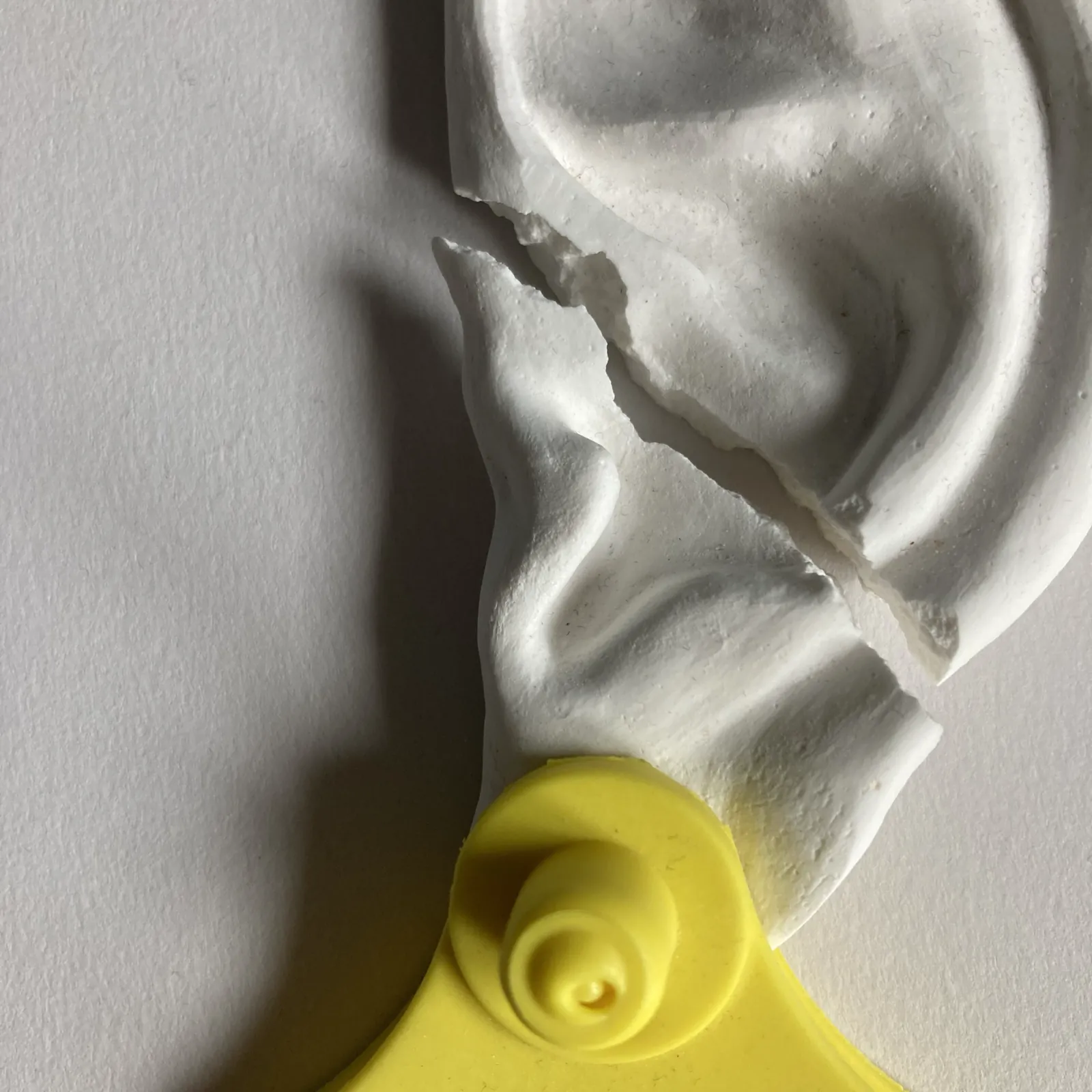
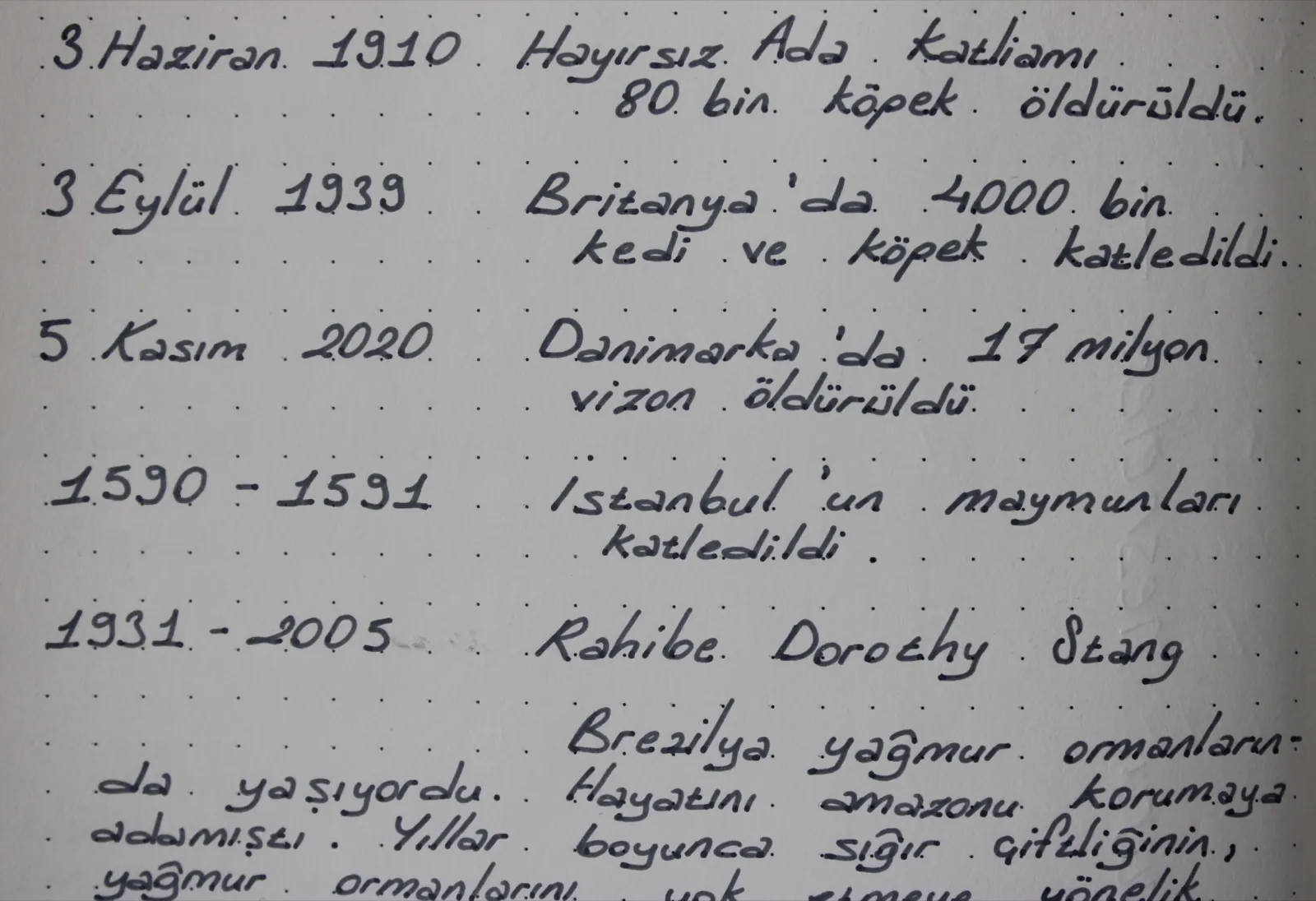
The dates
The artist's research notebook keeps a list of these dates: 3 June 1910 — Hayırsız Ada: İstanbul's street dogs were exiled to the island; 80,000 dogs died. 3 September 1939 — hundreds of thousands of cats and dogs were killed in Britain in the first days of the war. 5 November 2020 — 17 million mink were culled in Denmark. 1590–1591 — the monkeys of İstanbul were killed. 1931–2005 — Sister Dorothy Stang, whose life devoted to protecting the Amazon rainforest and its people against cattle ranching was ended in 2005.
In collective memory the tag belongs to the livestock industry: a number for every animal, a record for every number. By fixing this marking device to a human ear, the series brings legally sanctioned, ordinary suffering to the surface.
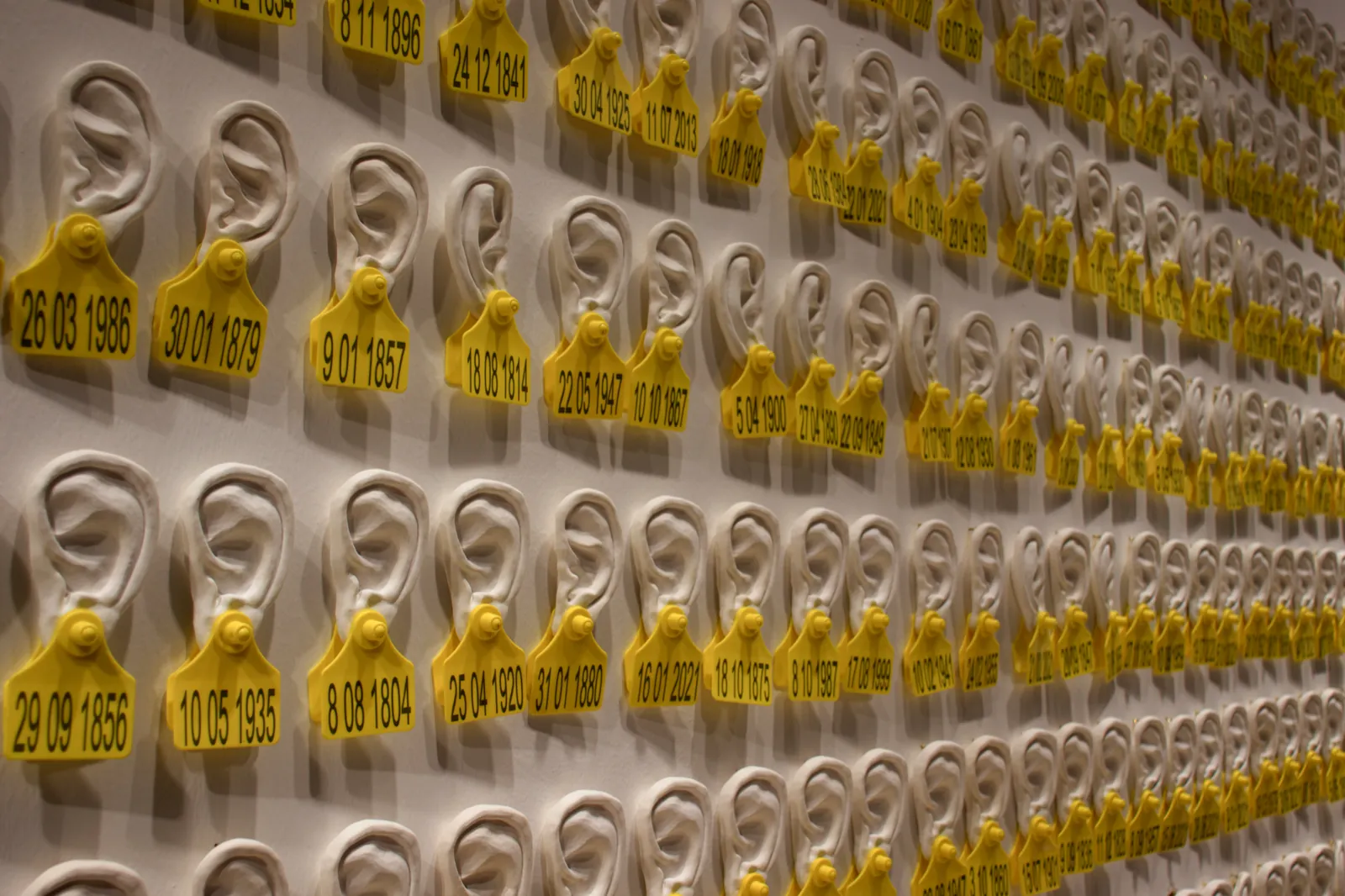
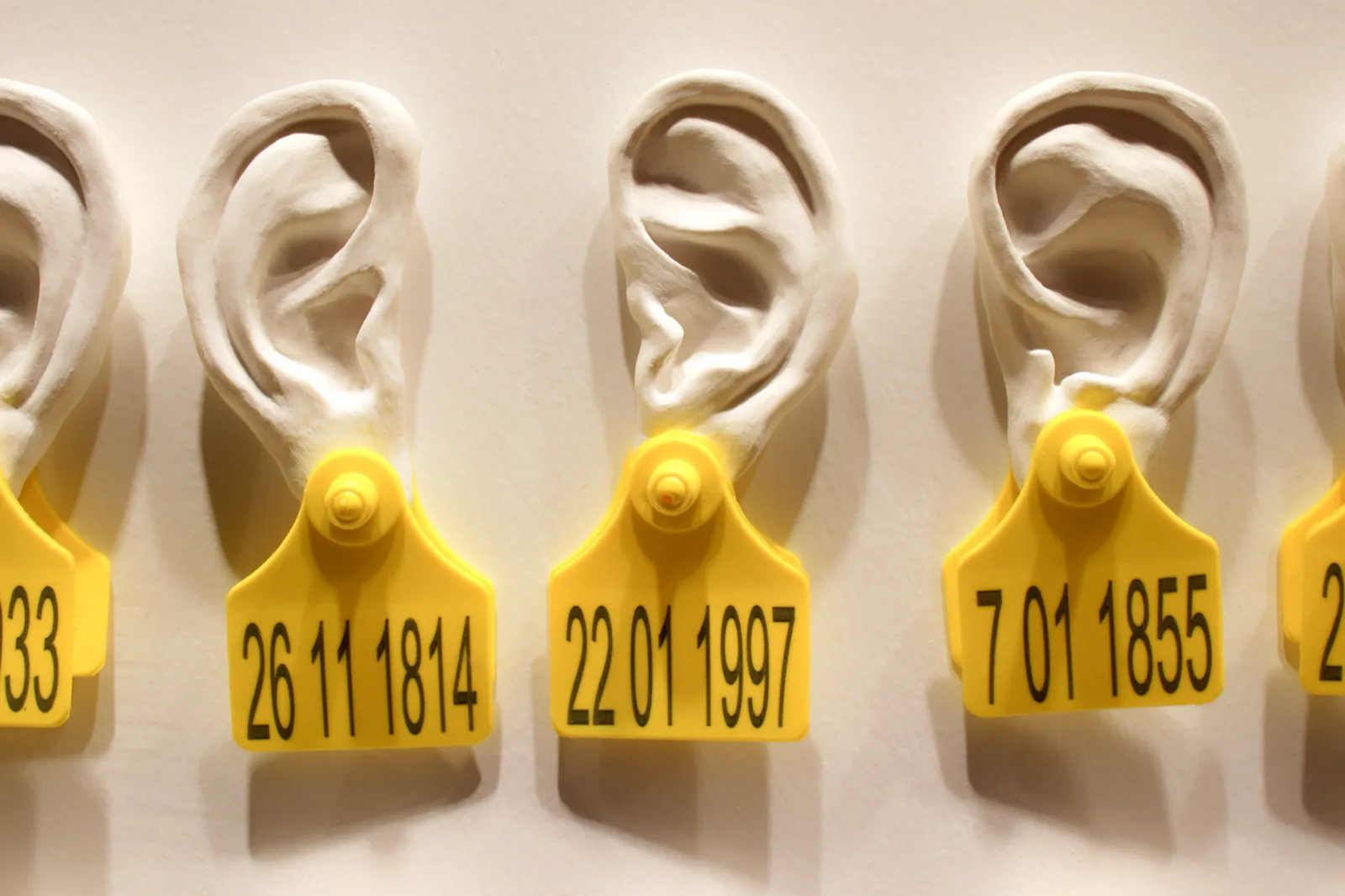
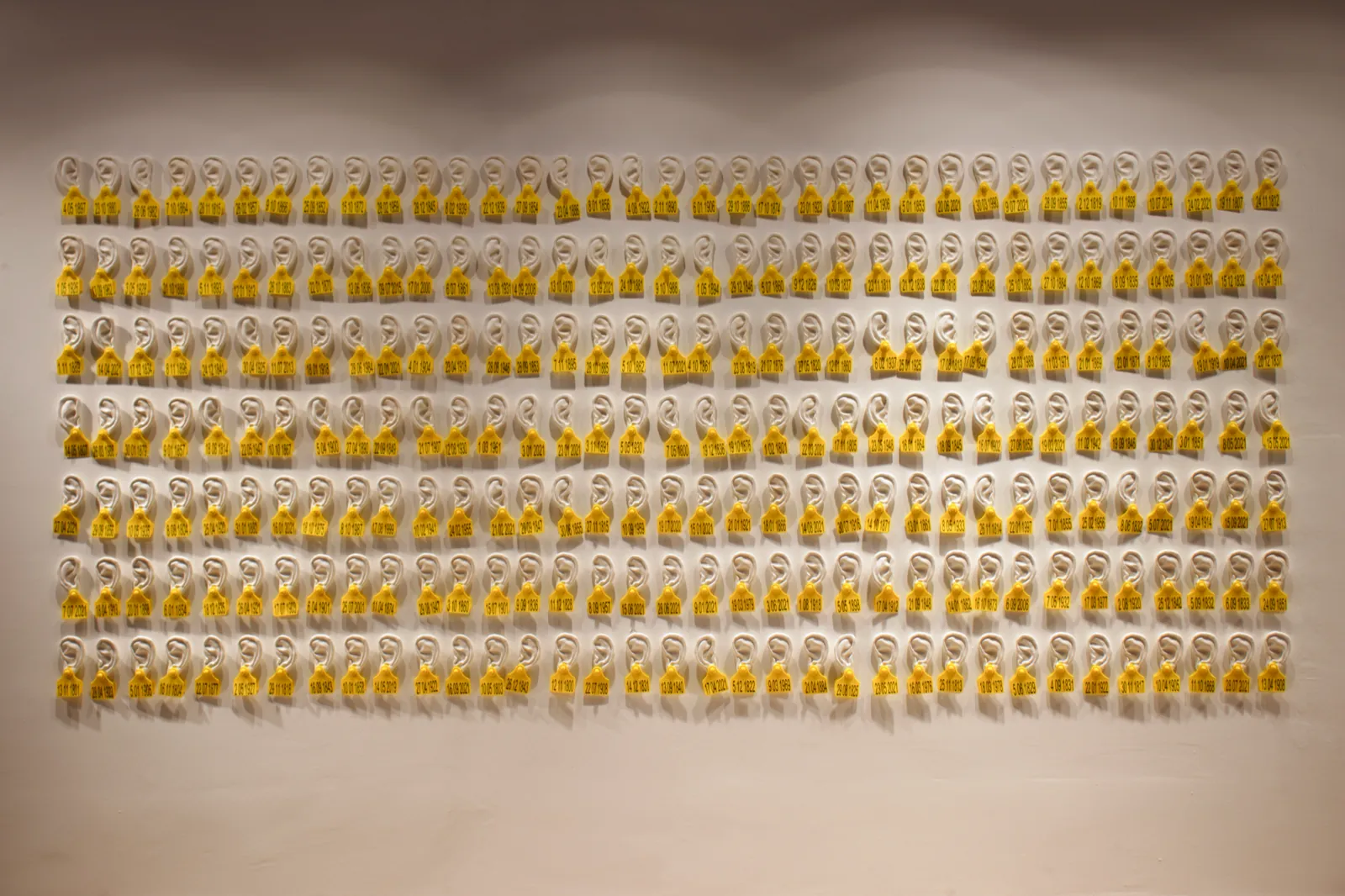
The series exists in two forms: single ears in white frames (3.5 × 21 × 30 cm) and an installation of hundreds of unframed ears placed directly on the wall (3 × 6.5 × 14 cm each).
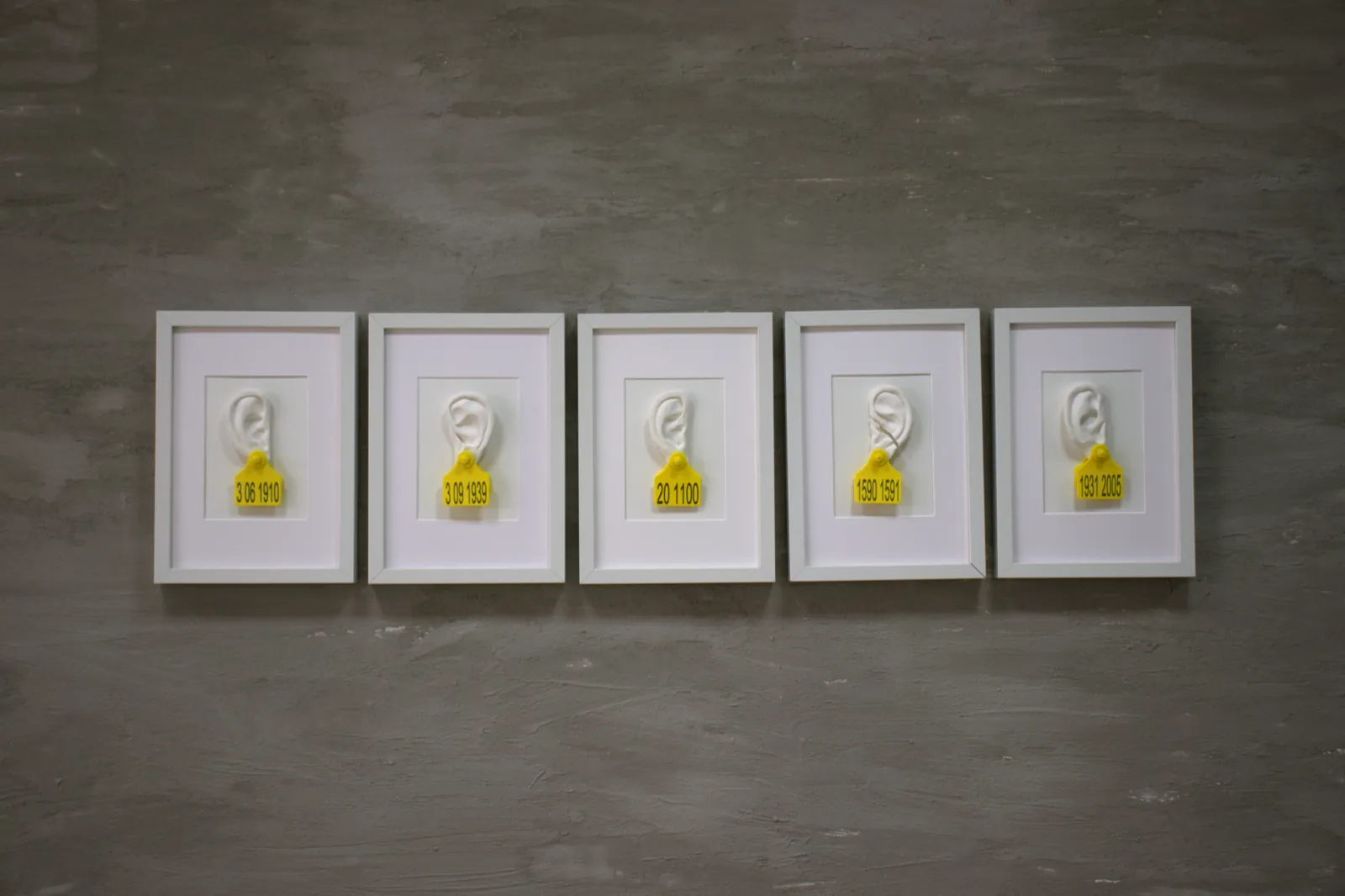
A limited number of framed pieces are available; see the Works page.